Conferences
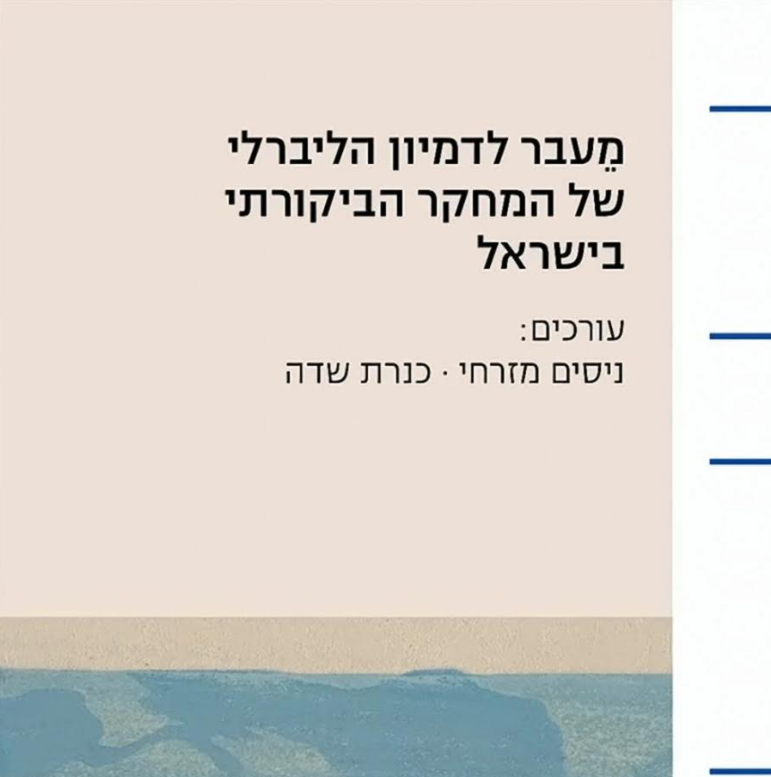
Launch Conference: “Beyond the Liberal Imagination: Critical Research in Israel”
At the launch of the edited collection “Beyond the Liberal Imagination: Critical Research in Israel,” we gathered for an evening of discussion and reflection on the critical discourse that has developed in the humanities and social sciences in Israel over the past three decades. The central question was why a discourse that seeks to promote and amplify the voices of minority groups sometimes struggles to mobilize precisely those groups. During the evening, participants were introduced to the collection’s central ideas and joined a discussion with its authors, faculty members, and the audience. We thank everyone who took part in the event.
Book Launch: “A Lexicon for Shared Society”
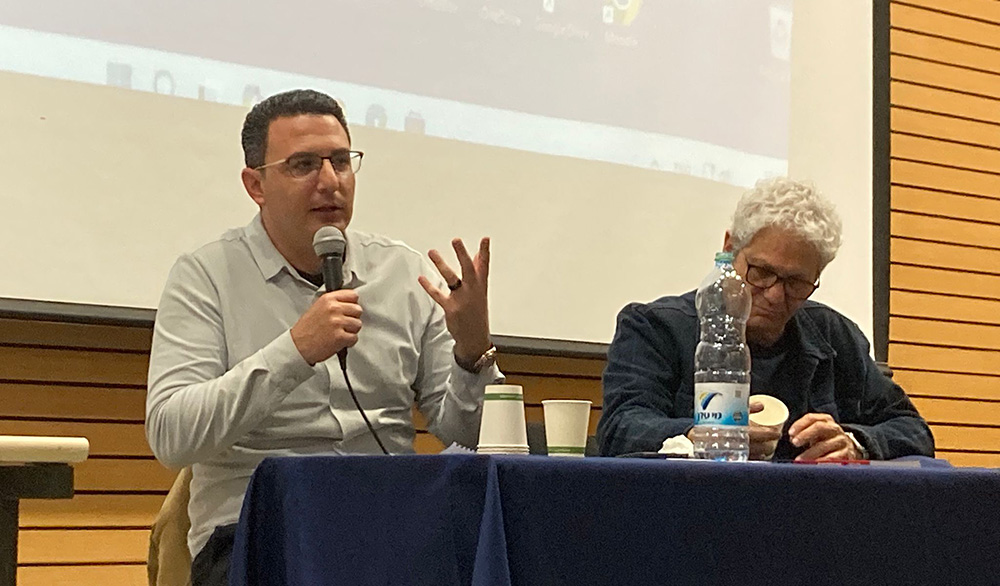
At the launch of “A Lexicon for Shared Society,” we were pleased to host Dr. Amir Fakhoury and Shuli Dichter of the Nisan Center for the Advancement of Shared Society. The evening offered an opportunity for conversation, reflection, and attentive engagement with the concepts through which we understand, describe, and build a shared society. We thank the book’s editors, respondents, and all those who attended and participated.
Link to the book on the Van Leer Institute website

Our Courses

Identity and Belonging in a Multicultural Society – Dr. Mirit Hayavi Barak
This course examines how identity and belonging are formed in a multicultural society, considering both the individual and groups and the relations among them.
The course moves from the individual to society: it begins by examining processes of self-construction through socialization and interaction, and then considers the formation of groups, social boundaries, conflicts, and intergroup encounters. It explores different approaches to managing cultural diversity and examines the tensions among personal identity, group identity, and social belonging.
The course then considers processes of recognition, inequality, and privilege as part of a broader web of intergroup relations, and concludes by examining the possibility of building a shared society – a society in which different groups live together through mutual recognition, participation, and cooperation.
Managing Conflict and Diversity in Israeli Society – Dr. Assaf Turgeman
The course surveys the principal cleavages in Israeli society by tracing their roots in Israeli social and political life. It addresses the Jewish – Arab conflict, the religious – secular divide, ethnic cleavages, and the constitutional revolution and its implications for contemporary political divisions.
Skills for Managing Diversity and Conflict across Life Domains – Dr. Ran Kuttner
This course develops skills for managing difference and conflicts arising from difference across multiple settings – from the interpersonal level, through the intergroup level, to the national level. Participants will acquire tools for collaborative dialogue, negotiation, and conflict management, while becoming familiar with the theories underlying the approaches studied. The course will also examine how these approaches can support constructive management of disputes surrounding social cleavages and polarization that undermine cohesion and resilience in different arenas in Israel. Accordingly, participants will acquire both conceptual frameworks and practical skills for action in the social sphere.
The course is reflective in character and, from its outset, invites students to examine how the material challenges their own assumptions and leadership practices, how they might wish to apply it in their personal lives, and what obstacles may stand in the way.
Practical Strategies for Engaging with Diversity in Israeli Society – Dr. David Barak-Gorodetsky
The course offers an in-depth examination of the political and social tensions between conservatives and liberals in Israel, while providing a practical toolkit for conducting dialogue in conditions of disagreement. The theoretical component explores the roots of polarization, focusing on the central role of religion and state, their influence on public policy, and the historical analysis of political strategies and case studies that have shaped Israeli society. This foundation supports the practical component, in which participants practice and acquire skills in deep listening, managing complex dialogue, and recognizing different perspectives. By combining academic analysis with experiential learning and simulations, the course develops the capacity for respectful and meaningful dialogue in situations of disagreement and provides practical tools for building trust and reducing tensions across identity-based, cultural, and political divides.